Warehouse Associate Screening Questions
Warehouse associate roles hinge on physical reliability, safety awareness, and schedule commitment. A good phone screen surfaces candidates who understand the physical demands, have a track record of showing up consistently, and can follow safety protocols without shortcuts. These questions cut through resume vagueness and get to the substance.
11 questions across 5 categories
"Walk me through the most physically demanding warehouse or labor job you have held. What were the daily lifting and movement requirements?"
What to listen for
Listen for specific weight ranges, repetitive motion tasks, and whether they described sustaining that output across a full shift - not just occasional heavy lifts. Vague answers often signal limited hands-on experience.
"Have you worked in a warehouse that used a WMS (warehouse management system) or handheld scanners? Which ones?"
What to listen for
Even basic scanner familiarity reduces training time significantly. Note specific system names - Manhattan, SAP EWM, RF Smart, or generic RF guns. Complete unfamiliarity is not a dealbreaker but does affect onboarding time.
"What is your experience operating powered industrial equipment - forklifts, reach trucks, pallet jacks (electric or manual)?"
What to listen for
Note which specific equipment and whether they hold a current certification for powered equipment. If the role requires a forklift cert, confirm they can provide documentation before the start date.
"Describe a time you caught a safety hazard before it became an incident. What did you do?"
What to listen for
Strong candidates name a specific hazard - spill, unsecured pallet, blocked egress - and describe taking action without being prompted. Candidates who deflect or give a generic answer may not be in the habit of proactive safety awareness.
"Tell me about a time a supervisor gave you feedback about your work pace or accuracy. How did you respond?"
What to listen for
Receptiveness to coaching is a strong indicator of retention. Defensiveness or blame-shifting here is a yellow flag for supervisors who will need to provide regular performance feedback.
"If you realized mid-shift that inventory counts in the system did not match what was physically on the shelf, what would you do?"
What to listen for
Candidates should describe escalating to a lead or supervisor and documenting the discrepancy - not adjusting counts on their own or ignoring it. This tests process discipline and communication habits.
"Our standard shift is 6am to 2:30pm, five days a week, with mandatory overtime during peak season (typically October through December). Does that schedule work for you consistently?"
What to listen for
Listen for a direct yes or for a clear explanation of constraints. Hesitation without context is worth probing. The goal is to surface schedule conflicts early, not after a start date is set.
"This role requires standing and walking for 8 or more hours per shift. Is there anything that would prevent you from meeting that physical requirement consistently?"
What to listen for
This is a direct ADA-compliant way to surface any physical accommodations needed before the offer stage. Listen for a straightforward answer. Follow-up only if they raise a specific concern.
"How do you maintain accuracy when you are pulling orders quickly and the pace is high?"
What to listen for
Look for specific habits - double-checking labels, scanning before moving, counting to a pick list. Candidates who say they just work fast without a system tend to have higher error rates.
"What does a reliable teammate look like to you in a warehouse environment?"
What to listen for
Strong candidates will name behaviors - showing up on time, communicating about issues, not leaving tasks half-finished. This question also reveals whether they think in team terms or only about individual output.
"How much notice can you typically give if something comes up and you need to call out?"
What to listen for
Listen for awareness that no-call no-shows create real operational problems. Candidates who mention they would always call ahead, give as much notice as possible, and try to arrange coverage show operational maturity.
Practical tips
Getting more from your warehouse associate screens
Ask about specific shift history in past roles. Candidates who have held warehouse jobs with consistent attendance records - visible from a reference check - are the strongest indicator of future reliability.
Cover physical requirements clearly and early. Courts have upheld post-offer medical screens, but pre-offer conversations must stay at the functional requirement level (lifting, standing time) rather than asking about medical history.
Confirm certification status for any powered equipment before scheduling an in-person visit. Forklift certs must be current and site-specific - a cert from a prior employer does not automatically transfer.
FAQ
Common questions about phone screening warehouse associate candidates
How many screening questions should I ask a warehouse associate candidate?
For a phone screen, 8 to 12 questions is the right range for a warehouse associate role. The goal is to verify the must-have qualifications, assess reliability, and surface any schedule or logistical constraints before investing in an in-person interview. Keep the call to 15-20 minutes. A structured voice screen through WorkSignal asks your exact questions on a real phone call and returns transcripts and scores for every applicant, so you only spend time on candidates who have already passed the baseline.
What is the most important thing to assess in a warehouse associate phone screen?
Beyond the specific technical or certification requirements for a warehouse associate role, the most important thing to assess is schedule reliability and genuine fit with the demands of the job. Most drop-off and early turnover in frontline roles traces back to a mismatch that was visible in the screening conversation but not probed. Use situational questions to get past rehearsed answers and listen for specifics - named situations, real numbers, and honest acknowledgment of challenges.
Can I run these screening questions as an automated phone screen?
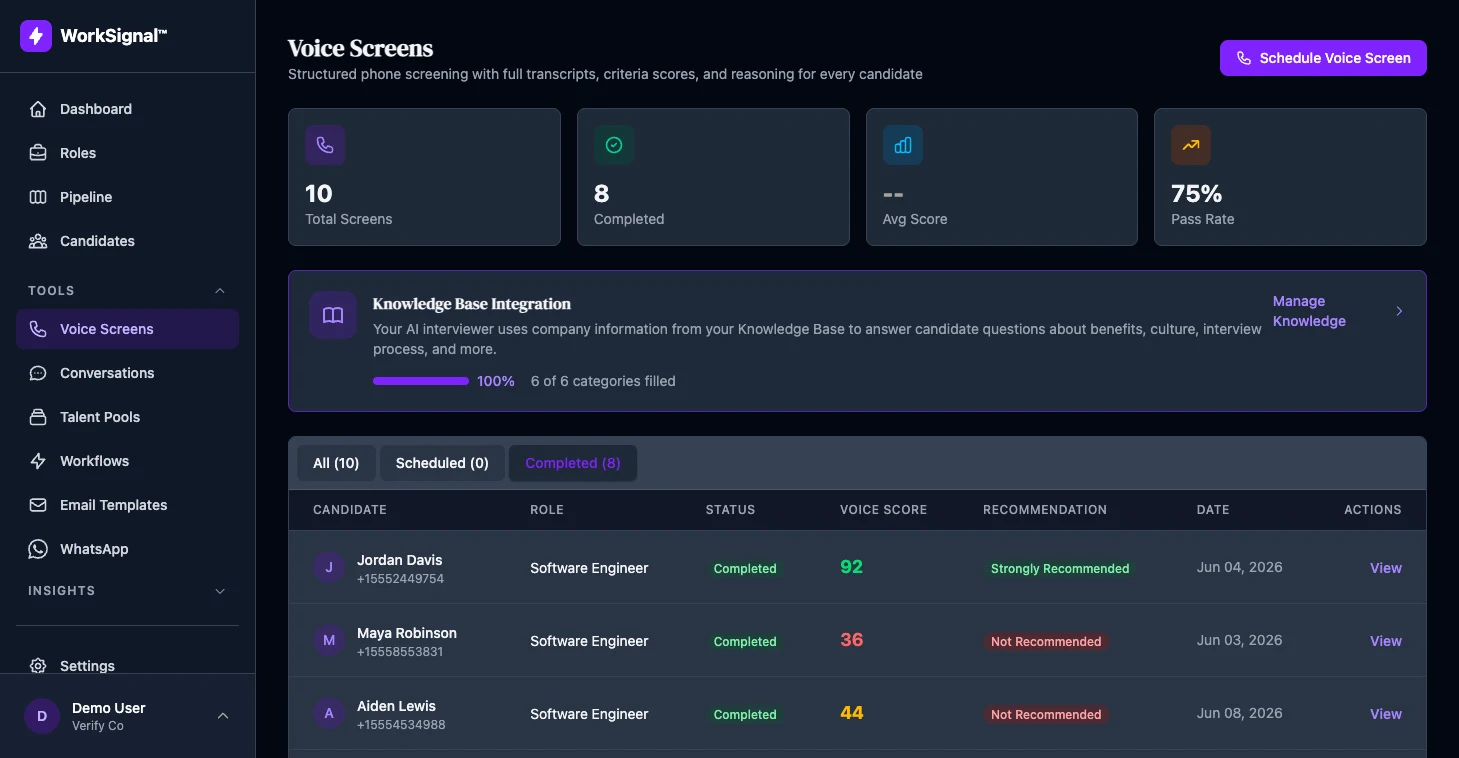
Yes. WorkSignal runs your exact screening questions as a structured voice screen on a real outbound phone call to every applicant. Each candidate speaks their answers in their own words. WorkSignal returns a full transcript, a score on each question, and a ranked shortlist - so you review the candidates who passed, not every application. Plans are custom-built for your volume. Talk to sales to scope the right package.
Run these questions as a structured voice screen
WorkSignal asks your exact questions on a real phone call to every applicant. You get a transcript, a score on each answer, and a ranked shortlist - without sitting on the phone yourself.
- Real phone call, not a chatbot or async video
- Your questions, scored and transcribed automatically
- Ranked shortlist delivered to your inbox or ATS
- Custom plans built for your volume - no seat fees, no scheduling overhead